You Matter. You Are Important. You Belong.

#the3Things

We provide a strengths-based approach to engaging communities, organizations, governments, adults and young people. We will inspire you, motivate you, and share the tools for you to do the same for others. Contact us today for more information.

Things That Are Happening

If your community, First Nation, or organization is wanting to hear young peoples experiences, insights, and ideas for change, for themselves, their relations and communities, click here to see how Three Things can create a process that has you saying to youth in your work, We’re Listening. Click here to learn more.

Were you following along as we worked with the Ulnooweg Indigenous Communities Foundation last year, listening to the voices of Indigenous youth in Atlantic Canada? Learn more about how we gathered the voices and help lift them up here.

Are you interested in creating space for young people in your community, organization or region to be heard? Get in touch and we can build a We’re Listening Project for you in 2025.

Youth voice matters as it provides an invaluable perspective on the issues that matter most to young people.

Youth are the present and the future, and their voices are critical to creating a better path forward for all. By listening to the perspectives of young people, we can better understand the challenges they face and co-create solutions tailored to their needs.

Furthermore, empowering young people to make their voices heard is essential for their development and empowerment. It provides them with an opportunity to express their opinions and be heard, and to feel valued and respected. It is also an important part of building their confidence, resilience, and self-esteem.

Finally, listening to the perspectives of young people is vital for creating meaningful and lasting change. It ensures that their needs and experiences are considered when making decisions and policies, and it encourages more diverse perspectives and more equitable outcomes.

Youth voices are essential for creating a stronger, healthier and better future for us all.

Learn more about our Youth Voice, Development and Healing Gatherings here or contact us if you are interested in learning more about this opportunity to build stronger futures for young people and your community.
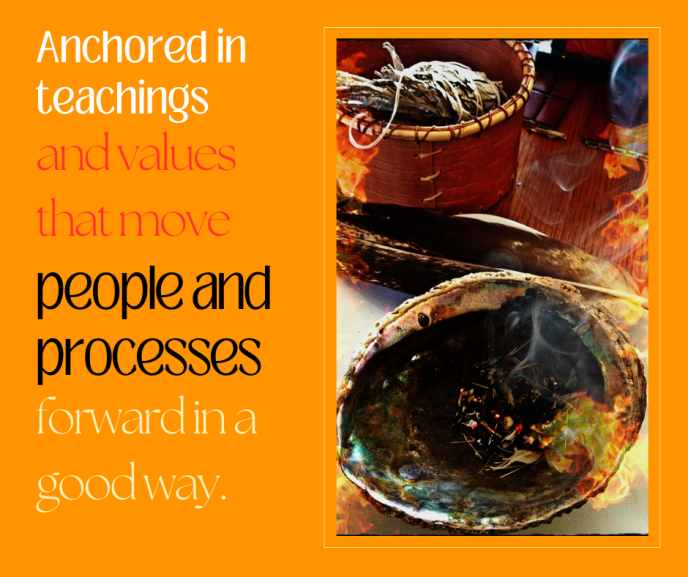
The world can be a challenging place to live. Let’s be honest. It isn’t that it can be, it is.

So what’s happening at Three Things is this ongoing reminder to those in our Circle along with our visitors and friends:

Don’t just take time, but make time to stop, breath, slow down, connect to others, the land around you, the water, or something bigger…we are continually reminded of the hurt in the world – and that’s a lot.

It’s OK to make time without the TV or devices.

It’s OK to not fully understand what or why things happen.

It’s OK to not be OK with the state of the world.

It’s OK to take care of you in the best way you can.

Make time for it. Make time for you. You are worth it.

You Matter. You Are Important. You Belong.

We continue to keep All Our Relations in our thoughts and offerings, and will continue to do so. If not for you, for ourselves. It reminds us that the path to peace is anchored in our understand that peace is within us to share.

Come Walk With Us…Join In On Conversations That Matter

Come Walk With Us… will be back soon! We have been taking some time away, but we are still walking forward – and Brennan and Pytor are exciting to spend Sunday nights together chatting with change makers from around the world!

Remember you can catch previous episodes on our Youtube page anytime!

Thank You To All Our Friends…

Our consultants are leaders in their areas of interest and are the reason Three Things has been able to find the kind of success we have in each project, activity and gathering.  We are so grateful for them and we honour them.  If you’ve crossed paths with these folks, you know, like we do, that they are the foundation of the good works being done collectively by Three Things.  We are grateful they have stayed connected during these challenging past few years and have been enjoying the chance to see them, in person, working together to create change.

Building Your Community:

We Are

  • Indigenous owned with a national scope of partners and clients.
  • A team of diverse Indigenous and non-Indigenous consultants with expertise in various sectors, specializing in working with youth, communities, not-for-profits, and government.
  • Recognized leaders and respected helpers working in partnership with you, your organization, and your community. Bringing people together.
  • Skilled in positive youth and community development, leading to safe, strong and healthy spaces for growth and action.
  • Leadership, Experience, and Innovation. That’s Three Things Consulting.

Building On Your Strengths: We Provide

  • Motivational and Inspiring Speakers
  • Training and Workshops for Youth and Adults
  • Creative Community and Youth Consultations
  • Cross Cultural Relationship and Capacity Building
  • Innovative and Creative Development for Community or Youth Programming and Special Projects
  • Reliable and Professional Project Management at Local, Regional or National Levels
  • Meaningful Event Management and Consultation for Youth and Adults
  • Consultative, Guidance and Advice on Youth and Community Trends

Connect with Us

Your needs matter to us, they are important and if you are interested in working in partnership with youth or your community, you have a place where you belong.

3 Things Consulting

There are many choices available for organizations, communities and governments when engaging with outside vendors to support their activities, develop and deliver community-based programming, offer services including program evaluations, process facilitation and communications and provide strategic advice. Most provide quality work and it can be a challenge to determine the best fit for your needs. Based on the number of clients who have engaged with us repeatedly, we believe we can be the fit you are looking for. We have found when we share values with our clients, we are able to develop lasting relationships that provide meaningful and measurable results from our work. We root our work in traditional knowledge and processes, research and science and years of experience. We are Three Things Consulting. We are an Indigenous owned and incorporated company, originally a collaboration between three innovators with a combined experience of more than seventy years in facilitation, evaluation, program design, youth and adult gathering development and management, community and youth engagement, project and research development and implementation, training and capacity building, assessment, strategic planning, partnership/program development and knowledge sharing. Our roots and process are tied to a core lesson learned from our work: people matter, are important and belong. Our focus is on engagement, development, motivation and healing. We share #the3Things with young people, their families, communities and allies reminding them that they matter, are important and that they belong.
3 Things Consulting
3 Things ConsultingWednesday, July 8th, 2026 at 10:32am
Mid Week Thoughts from Three Things...

This past weekend we were, once again, grateful for the women in our community: the grandmothers, momma bears, aunties, sisters, cousins, nieces, daughters, and granddaughters.

We had the privilege of spending time at the local Strawberry Social hosted by the Katarokwi Grandmothers' Council while listening to women sharing teachings and offering us all a deeper understanding of Ode’imin, the heart berry.

The efforts of the Grandmothers and everyone who helped plan, prepare, welcome, and clean up reminded us that strong communities are built on sweat equity and spirit equity. These gatherings don't simply happen. They are created through love, care, and countless unseen acts of service. They matter. It matters.

Our time with the Grandmothers had us surrounded, simply, by good loving medicine.

Later that day we heard the drums and songs offered by another group of women who, for the past seven years, have brought together the Kingston Water Walkers. We cheered on the women, and the men supporting them, each offering of themselves physically, emotionally, mentally, and spiritually as they set off with good intention and love for the water and all its relations.

Prior to leaving, some of the women gathered water from Lake Ontario here in Kingston. After walking 64 kilometres to Tyendinaga Mohawk Territory, they offered that water back to Mother Earth.

Water Warriors matter, and the songs they sang along the route offered healing and reminders of our connection to all our relations. Whether someone walked every step, volunteered as a driver, carried a sacred Staff, or simply offered encouragement, together they ensured that, like our Ancestors before us and for those yet to come it was known that the water is being cared for, loved, nurtured, prayed over, and protected.

The fact that two women-led healing activities took place this weekend isn't by chance. It reflects something we've witnessed again and again. Many of the Indigenous spaces and places in this area were either visioned, founded, guided, supported, or led by women. For that, we are grateful.

When we think at Three Things about our clients and partners, many are women. Reflecting on the past fifteen years, we've noticed that more often than not, it has been women who have invited us to walk alongside them. Whether it's Nations or communities, organizations, governments, or systems, we have great pride in this.

Men play essential roles in our communities, and their contributions matter deeply. Yet time and again we witness women carrying extraordinary responsibility often quietly, (though with loud laughter), and often without acknowledgment.
We lift our hands to them with gratitude. We acknowledge the role they play and will do our best to always show up in these women-led spaces to stand alongside them, doing as they instruct and valuing their guidance and direction.
Every day our communities heal, celebrate, gather, and move forward because women continue to carry, teach, organize, nurture, and lead. We acknowledge the women who have made it so and recognize the cost to them, even as they continue doing it for all of us.

Today is simply Wednesday. We don't need a designated day to express our gratitude or honour women.

Neither do you. And, you made this far, so why not comment below and share some love by tagging or sharing about a woman, or women, who matter to you.
3 Things Consulting
3 Things ConsultingMonday, June 29th, 2026 at 4:07pm
Yesterday we shared our thoughts on all our relations who have been displaced in Niagara Falls, from their homes in Kashechewan First Nation, (you can find it below), and the rather unkind language used by local leaders in Niagara Falls when talking about the current situation.

Today, we follow that up with a friendly reminder, kindness matters.

For those that don't know, we have a program designed specifically to boost kindness, both externally and internally. From an half day session for workplaces, community spaces, and all the places, to multi-day sessions for young people.

We created it as we have seen the power and meaningful outcomes that kindness generates - for those being kind, and those accepting it, (which also, is a skill that needs to be practiced and build upon).

Either way, today, whether it's easy or hard, be kind. Trust us, you'll be happy you did.
3 Things Consulting
3 Things Consulting
3 Things ConsultingSunday, June 28th, 2026 at 2:44pm
Saturday Thoughts from Three Things...

Niagara Falls, Ontario welcomes, with wide open arms, between 12 and 14 million visitors each year, with the largest share coming from Canada, particularly Ontario.

Yet those welcoming arms may not feel quite as open if you are one of the more than 2,300 people displaced from Kashechewan First Nation after the failure of your community’s water treatment system in January 2026 and, instead of being relocated to Kingston, Timmins, Cochrane or Kapuskasing, you have been staying in Niagara Falls.

Building on a recent report authored and presented by Ken Todd, the retired Niagara Falls Chief Administrative Officer, and subsequent comments from Mayor Jim Diodati in the Niagara Falls Review, a conversation has begun about where evacuees should be housed, who should pay for it, and what impact they have on host communities. From where we sit in the world, somewhere along the way, the conversation went south.

It became a story about the burden on a city rather than the burden carried by an entire First Nation.

As a First Nations-owned consulting firm that has spent decades working alongside First Nations, Inuit, and Métis communities and Indigenous organizations across Canada, we have witnessed the resilience of communities responding to challenges they did not create. That is why this story matters to us.

If the greatest hardship leaders see is the strain on a tourism city, they have missed the real story. The greatest hardship belongs to the children, families and Elders who have spent months living away from home because Canada still has not ensured something most Canadians take for granted: safe and clean water.

There are legitimate questions to ask about emergency planning, municipal resources and government funding. We do not question that Niagara Falls has experienced pressures. Housing more than a thousand people who have been forced from their homes places demands on emergency services, health care, schools, community organizations and municipal budgets. Yet, Niagara Falls is also a city that successfully welcomes approximately 13 million visitors each year. Context matters.

The more important question, however, is one neither Mayor Diodati nor Mr. Todd asks: Why are we not building resilient infrastructure so First Nations like Kashechewan don’t have to evacuate in the first place?

These are the questions strong leaders ask in solidarity with First Nations, rather than simply debating where the next evacuation should occur.

Truthfully, this is not simply a Kashechewan story. It is a Canadian story. An entire Nation has been living away from home for months because, in one of the wealthiest countries in the world, safe drinking water infrastructure has once again failed. We should be asking how that became acceptable, not debating which city should carry the “burden” - their word, not ours.

The need for an evacuation itself is the failure. Not the Kashechewan citizens who have been displaced to Niagara Falls. We can’t help but feel that those most effected and at the centre of this challenging story have somehow disappeared in the narrative.

The people of Kashechewan did not choose to leave their homes. They did not choose to spend months raising children in hotel rooms, separated from their land, schools, pets, community and the comfort of knowing when they will return home. They are not visitors on vacation. They are families living through the consequences of an infrastructure failure that should never have happened in the first place.

Words matter. When leaders repeatedly describe people as a “burden,” “a strain,” or something communities must “absorb,” even if the intention is to describe systems rather than individuals, we risk changing how residents see people who have already experienced profound disruption. It becomes easy to view evacuees as the problem instead of recognizing that they are living through one.

This is how misinformation takes root and how long-standing stereotypes about First Nations can become reinforced, even when that was never the speaker’s intention. We presume neither Mayor Diodati nor Mr. Todd intended that outcome.

However, when language consistently frames people through the lens of pressure, burden and strain, many readers may understandably conclude that someone else’s presence means less for them.

There is a conversation to be had about better emergency planning, stronger support for host communities and improved coordination among governments. We agree with that. But if we are looking for what is truly unfair, we should begin with the fact that, in Canada, entire First Nations continue to be displaced because safe water and essential infrastructure remain unreliable.

The burden is not the people from Kashechewan.
The burden is a system that continues to fail them.

We listened to Kashechewan First Nation Executive Director Tyson Wesley respond to the original article by describing the ongoing water crisis as a national tragedy.

He is right, and this is far bigger than Niagara Falls or Kashechewan. It is a Canadian tragedy. More troubling still, it is a tragedy that continues to repeat itself because the underlying problems remain unresolved.

This is where communities like Niagara Falls have an opportunity to lead. Rather than simply asking where evacuees should go or who should bear the costs, municipal leaders can become strong allies to the families they are hosting by joining First Nations in calling for what should never be controversial: safe, reliable, properly funded water and wastewater systems for every First Nation in Canada.

The measure of a community is demonstrated by its strength, resilience, care and kindness. We have experienced those gifts in our visits to Kashechewan First Nation over the years from youth, Elders, helpers, and leaders.

Niagara Falls, you can be remembered not only for opening your doors, but for using your voice to help ensure this doesn't happen again. Your kindness helps ensure Kashechewan residents can return home with dignity, and that will be the measure of your community.

That is the conversation this moment deserves.

And that is how we ensure fewer communities ever have to endure what Kashechewan is living through today.

Contact Us